Built-in Shelving vs Freestanding Bookcases: A Brief History and How to Decide
Shelving and bookcases do more than hold objects: they shape how we live in a room. Two enduring approaches—built-in shelving and freestanding bookcases—have evolved over centuries and remain popular today. Understanding where each came from helps clarify their strengths and limits, and makes it easier to choose the right solution for a particular home.
A short history: how the two approaches developed
The idea of freestanding furniture goes back millennia. Early civilizations used movable chests and shelving so pieces could be rearranged as needed. In Western domestic interiors, freestanding bookcases became especially widespread in the 18th and 19th centuries as private libraries grew; craftsmen produced tall, ornate cases that could be moved or sold with a household.
Built-in shelving, by contrast, has roots in architectural traditions that integrated storage into the fabric of a building. In many historic houses of the 17th and 18th centuries, storage was part of joinery—alcoves, window seats with storage, and cabinetry built against walls. The Victorian era popularized extensive built-in woodwork such as book alcoves and service cupboards. Later movements—Shaker and Arts & Crafts—favored built-ins for their clean lines and efficient use of space.
In the 20th century, mass production made freestanding bookcases more affordable and democratic, while modern architects and designers continued to champion built-ins for their permanence and seamless appearance. Today both approaches coexist: freestanding pieces for flexibility, built-ins for a tailored, integrated look.
Comparing the approaches
Built-in shelving: qualities, benefits, and trade-offs
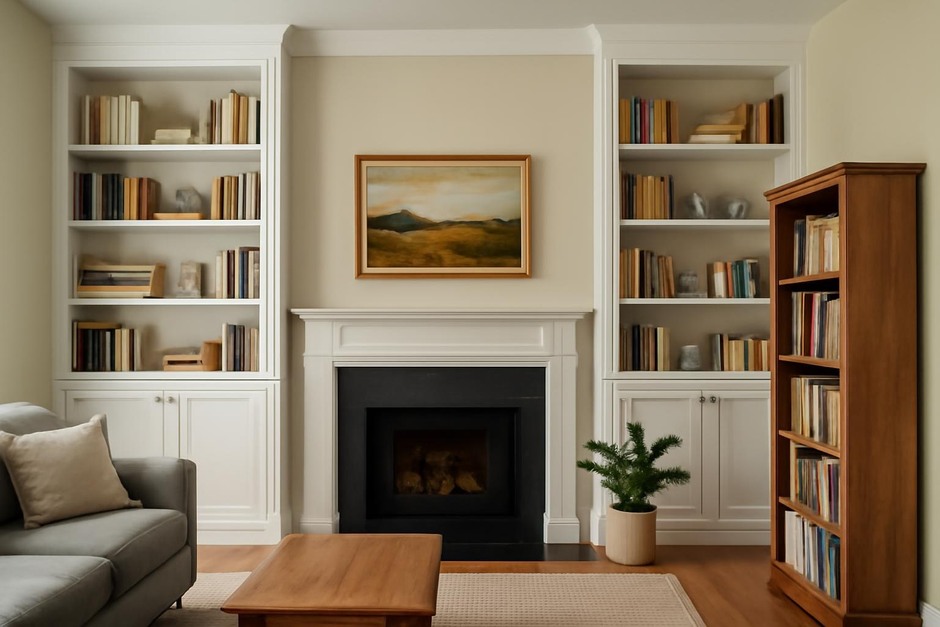
- Visual unity: Built-ins can be designed to match moldings, wall paint, and architectural features, creating a cohesive, polished appearance.
- Space efficiency: They often make better use of awkward nooks, alcoves, and the full height of a room.
- Durability and permanence: Properly installed built-ins are sturdy and can become a defining feature of a house.
- Higher initial cost and commitment: Custom work or carpentry is more expensive than ready-made furniture, and built-ins are not easily moved when tastes or needs change.
- Potential resale impact: Well-executed built-ins can add character; poorly executed or overly personalized choices may limit appeal to future owners.
Freestanding bookcases: qualities, benefits, and trade-offs
- Flexibility: Move pieces between rooms, reconfigure a layout, or take furniture when relocating.
- Range of styles and budgets: From handcrafted antique cases to affordable modular systems, options suit many tastes and pockets.
- Ease of installation: No carpentry required beyond assembly; they can be a quick way to add storage.
- Potential for mismatch: Without careful selection, freestanding pieces can look transient or out of scale with a room.
- Space limitations: Freestanding cases might not make the best use of irregular walls or built-in niches.
How to choose: practical guidance
Deciding between built-ins and freestanding bookcases comes down to a few clear considerations. Use the questions below as a simple decision guide.
- Is the space a long-term feature of your home?
- If you plan to own the home for many years and want a cohesive look, built-ins are a strong choice.
- If you rent or expect frequent moves, freestanding pieces preserve flexibility.
- How important is flexibility?
- Choose freestanding if you often rearrange rooms, collect different-sized objects, or like to update style regularly.
- Built-ins suit households that favor permanent organization and fewer layout changes.
- What’s your budget?
- Freestanding options cover a wide price range and can be a budget-friendly way to get immediate storage.
- Built-ins typically require a larger up-front investment; consider semi-custom or modular built-in systems to lower costs.
- Do you need tailor-made storage?
- If you have an odd alcove, under-stair space, or require concealed storage for specific items, built-ins can be designed precisely for those needs.
- For general book storage or display, a freestanding system may be perfectly adequate.
- How important is resale neutrality?
- Choose neutral finishes and classic proportions for built-ins if you’re concerned about appealing to future buyers.
- Freestanding pieces can be changed if a new owner prefers a different look.
Finally, consider a hybrid approach: combine a built-in base or alcove with freestanding shelves that can be updated. This gives a sense of permanence while preserving some adaptability. Before committing, measure carefully, make simple mock-ups with painter’s tape to test scale, and think about how the pieces will be used daily—display versus hidden storage, weight-bearing needs, and access.
Whether you choose built-in shelving or a freestanding bookcase, the best choice balances how you live with how you want your home to look. Both approaches carry centuries of practical reasoning; matching that history to present-day needs will help you create a calm, well-ordered space.